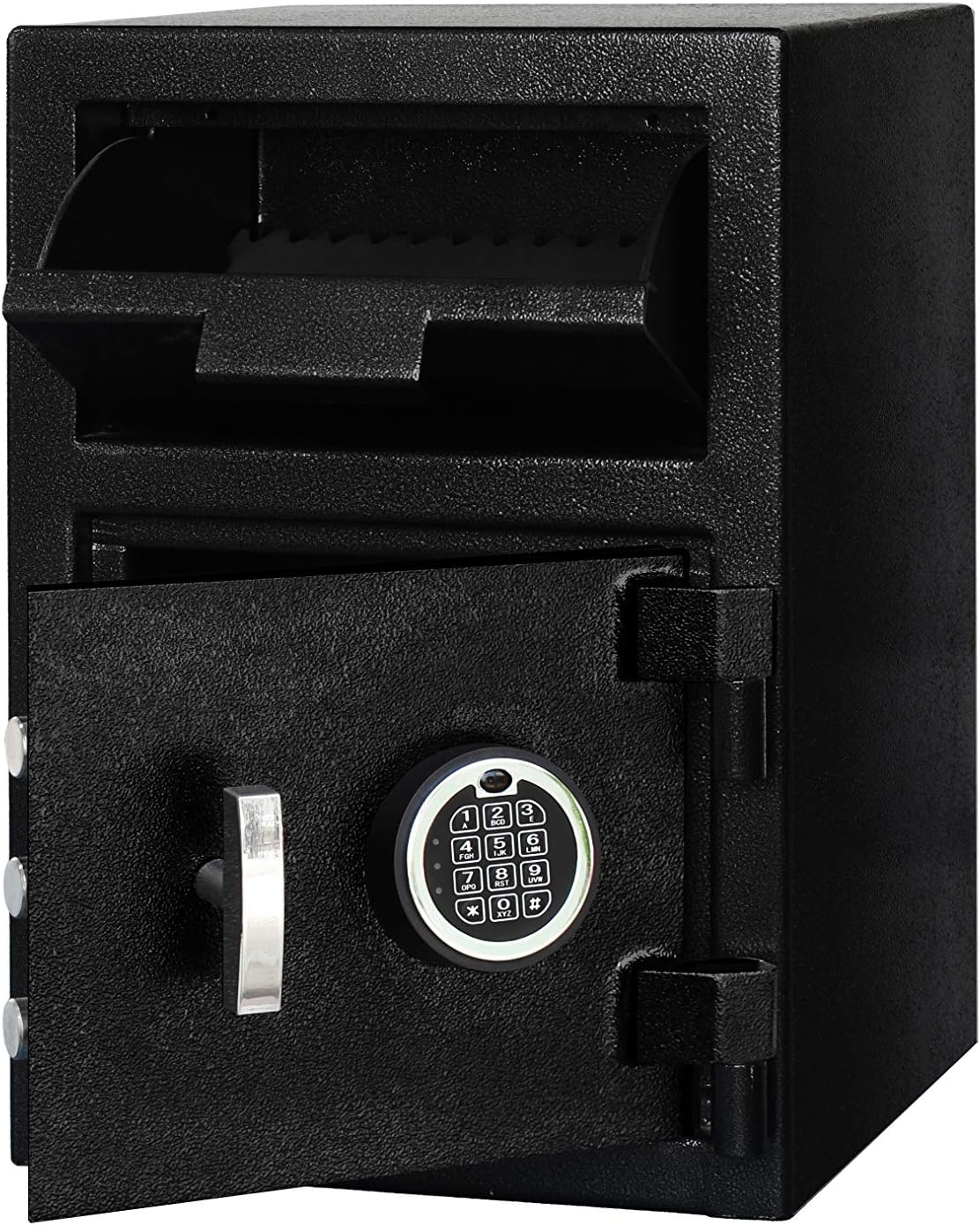
Templeton Safes T862 Standard Depository Safe with Electronic Keypad Combination & Key Backup, 1.12 CBF


Price: $539.99
(as of Mar 20, 2026 13:52:04 UTC – Details)

Templeton Safes T862 Standard Depository Safe: A Professional-Grade Security Solution for Controlled Access and Secure Deposits
In environments where cash handling, sensitive document storage, or shared access to valuables is a daily reality—from retail cash wraps and restaurant manager offices to small business back rooms and community organization vaults—the need for a secure, auditable, and user-friendly depository safe is paramount. The Templeton Safes T862 Standard Depository Safe, with its 1.12 cubic feet of storage, electronic multi-user keypad, and robust physical security features, is engineered specifically for these high-traffic, accountability-focused scenarios. This review provides a detailed, specification-based analysis of the T862, assessing its construction, security mechanisms, operational features, and suitability for its intended professional use.
Design and Build Quality: Understated Strength
The T862 presents a no-nonsense, professional aesthetic. Its classic black textured finish is not merely cosmetic; the surface texture contributes to a non-reflective, low-profile appearance that blends seamlessly into an office, stock room, or retail environment without advertising the wealth it protects. The core construction is where this safe asserts its seriousness. It is fabricated from “heavy-duty and drill-resistant hardened steel,” a critical specification that forms the first line of defense against forced entry attempts. This isn’t thin sheet metal; it’s a solid steel shell designed to withstand punishment.
The overall dimensions of 14 x 14 x 20 inches provide a compact yet substantial footprint, suitable for floor standing or wall mounting in most standard workspaces. The weight, while not explicitly listed in the provided description, is implied by the “solid steel design” and the inclusion of three massive steel locking bolts, suggesting a heft that deters casual removal. The build quality emphasis on “reinforced pry-proof hinges” addresses a common vulnerability in safes, ensuring the door cannot be simply peeled away from the frame.
Core Security Architecture: The Triple-Bolt and Anti-Fishing System
The heart of the T862’s security is its triple bolt action locking mechanism. Upon closing and locking, three solid-steel deadbolts—likely one horizontal and two vertical—shoot into the door frame, creating a multi-point lock that distributes force and makes prying the door open extraordinarily difficult. This is a significant upgrade over single or double-bolt systems and is a standard feature in higher-grade commercial safes.
The most distinctive and functionally critical feature is the hinged deposit door with anti-fishing security. This separate, smaller door on the front of the safe is the primary interface for most users. It allows for the deposit of cash, envelopes, or small items without granting access to the main storage compartment. A user can open this deposit drawer, drop in their deposit, and close it, all while the main safe door remains securely locked. The “anti-fishing” descriptor is vital here; it indicates a design that prevents a thief from using tools (like a coat hanger or grabber) through the deposit slot to illicitly retrieve items from the main chamber. This compartmentalization is ideal for shift-based businesses where employees need to make deposits but should never have access to the consolidated funds or stored documents.
Electronic Access Control: Flexibility and Multi-User Management
The T862 moves beyond simple single-code entry with its digital electronic keypad that supports up to 6 unique user codes. This is a game-changer for businesses. Managers, assistant managers, and trusted senior staff can each have their own personal code, creating a clear audit trail. The system also mentions an optional dual-user function, where two different codes must be entered to open the main safe, implementing a two-person integrity rule for heightened security during, for example, cash drops or safe opening.
Additional electronic security layers include:
- Time-Delay Function: This feature introduces a programmable wait period (e.g., 1-99 minutes) between code entry and the safe unlocking. It is a powerful deterrent against armed robbery, as it prevents a thief from forcing an employee to open the safe and immediately taking its contents. The delay allows for security response time.
- Lockout Mode: After a predetermined number of incorrect code attempts, the keypad will temporarily lock out, preventing brute-force hacking attempts.
Fail-Safe Access: The Critical Backup Key
No electronic system is infallible. The T862 intelligently mitigates this risk with a traditional hidden backup lock, operated by included keys. In cases of dead batteries (though battery life isn’t specified, it’s a common consideration for any electronic lock), keypad failure, or forgotten codes, the provided keys offer a guaranteed, non-electronic path to access. The fact that these keys are included underscores the manufacturer’s commitment to ensuring the owner is never permanently locked out. The “hidden” aspect suggests the keyhole is discreetly placed to avoid drawing attention.
Installation and Mounting: Anchoring Security
The safe includes all necessary mounting hardware and instructions to secure it to a floor or wall. This is not optional for a depository safe of this type; permanent anchoring is essential to prevent the entire safe from being removed. The inclusion of the hardware simplifies the setup process for the end-user, though professional installation is still recommended to ensure it is secured to a suitable substrate (concrete floor, stud wall) that can withstand the forces of a theft attempt.
Storage Capacity and Utility: Purpose-Built for Deposits
The 1.12 cubic feet (CBF) of internal storage is a specific and practical capacity. It is not intended for bulky items but is perfectly sized for the core purpose of a depository safe: stacks of currency (bills, coin rolls), zippered deposit bags, jewelry trays, small sensitive document boxes, and other high-value, compact items. The internal layout is not detailed, but the primary function revolves around the deposit process. The main compartment is accessed only by authorized users with the correct code, allowing for consolidated storage of accumulated deposits and other valuables, while the daily flow of deposits happens through the secure front drawer.
Target Audience and Ideal Use Cases
The T862 is not a general-purpose home safe for firearms or large collectibles. Its design is laser-focused on commercial, retail, and institutional applications:
- Retail & Restaurants: For nightly cash drops by closing staff.
- Small Businesses & Offices: For managing petty cash, sensitive client files, or shared small equipment.
- Banks & Credit Unions (Teller/Manager Level): As an intermediate deposit safe before funds are moved to a main vault.
- Hotels & Hospitality: For securing room key deposits or mini-bar revenue.
- Non-Profits & Churches: For managing collection donations or restricted funds.
Its strength is in enabling controlled, multi-user deposits while maintaining a high-security barrier to the consolidated contents.
Conclusion: A Specialized Tool for Accountability
The Templeton Safes T862 Standard Depository Safe excels as a specialized security tool. Its combination of hardened steel construction, the triple-bolt lock, the anti-fishing deposit drawer, and sophisticated multi-user electronic control addresses the exact needs of a business requiring secure, auditable deposits by multiple personnel. The inclusion of a physical backup key provides a crucial failsafe. While its 1.12 CBF capacity is limited, it is commensurate with its role as a depository, not a primary storage vault. For any operation where “drop and go” security is needed without compromising the safety of the consolidated holdings, the T862 represents a serious, well-specified investment in operational security and accountability. Its value lies in the seamless integration of physical fortification and smart access management for the modern workplace.