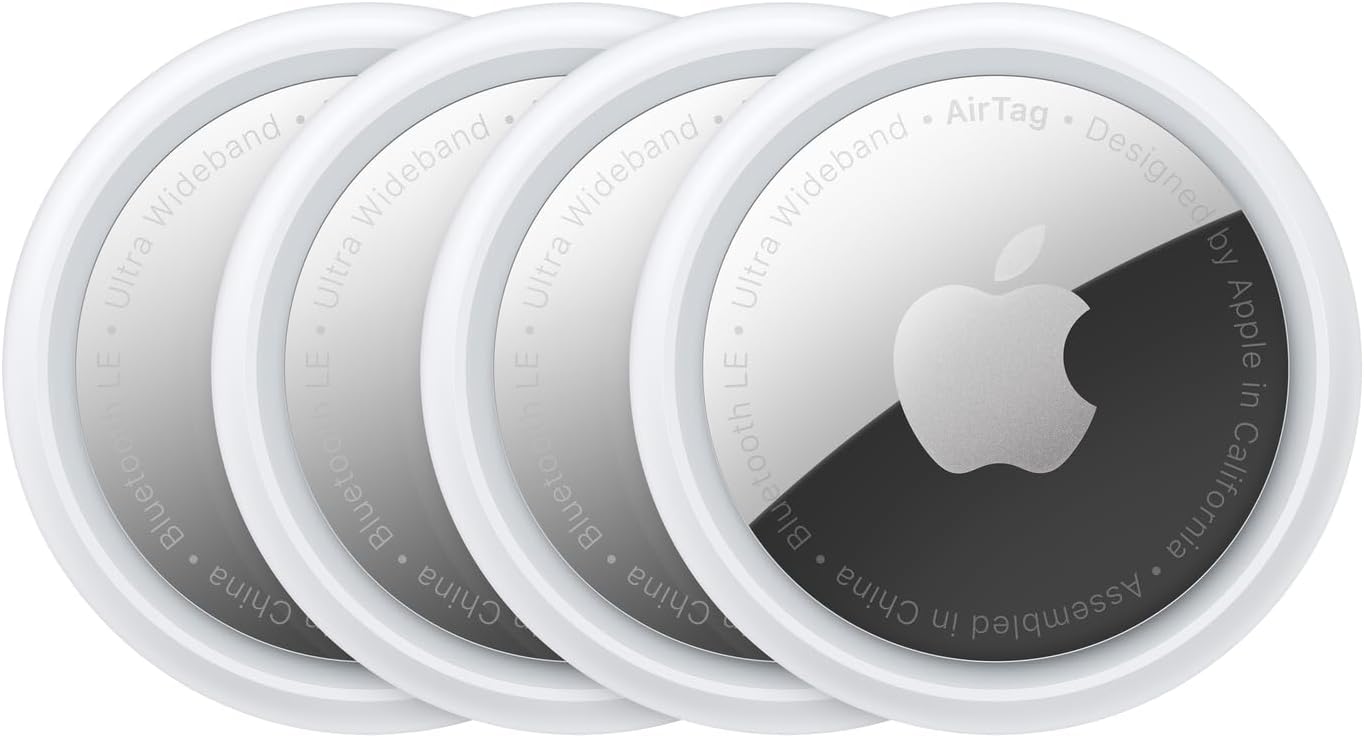
Apple AirTag (1st Generation) – 4 Pack. Keep Track of and find Your Keys, Wallet, Luggage, Backpack, and More. Simple one-tap Set up with iPhone or iPad, Bluetooth


Price:
(as of Mar 20, 2026 02:29:46 UTC – Details)

The Invisible Guardian: A Comprehensive Review of the Apple AirTag (1st Generation) 4-Pack
In an increasingly mobile and busy world, the small, frustrating moments of misplacing essentials—keys vanishing before a meeting, a backpack left in a café, or luggage embarking on an unscheduled detour—can derail an entire day. Apple’s answer to this universal woe is the AirTag, a seemingly simple coin-sized tracker that leverages the immense power of the Apple ecosystem to become a potent, silent guardian for your most valuable items. This review examines the first-generation Apple AirTag sold in a convenient four-pack, dissecting its design, functionality, and real-world utility based solely on its advertised capabilities and integration with Apple’s Find My infrastructure.
Unboxing and First Impressions: minimalist Design, Maximum Potential
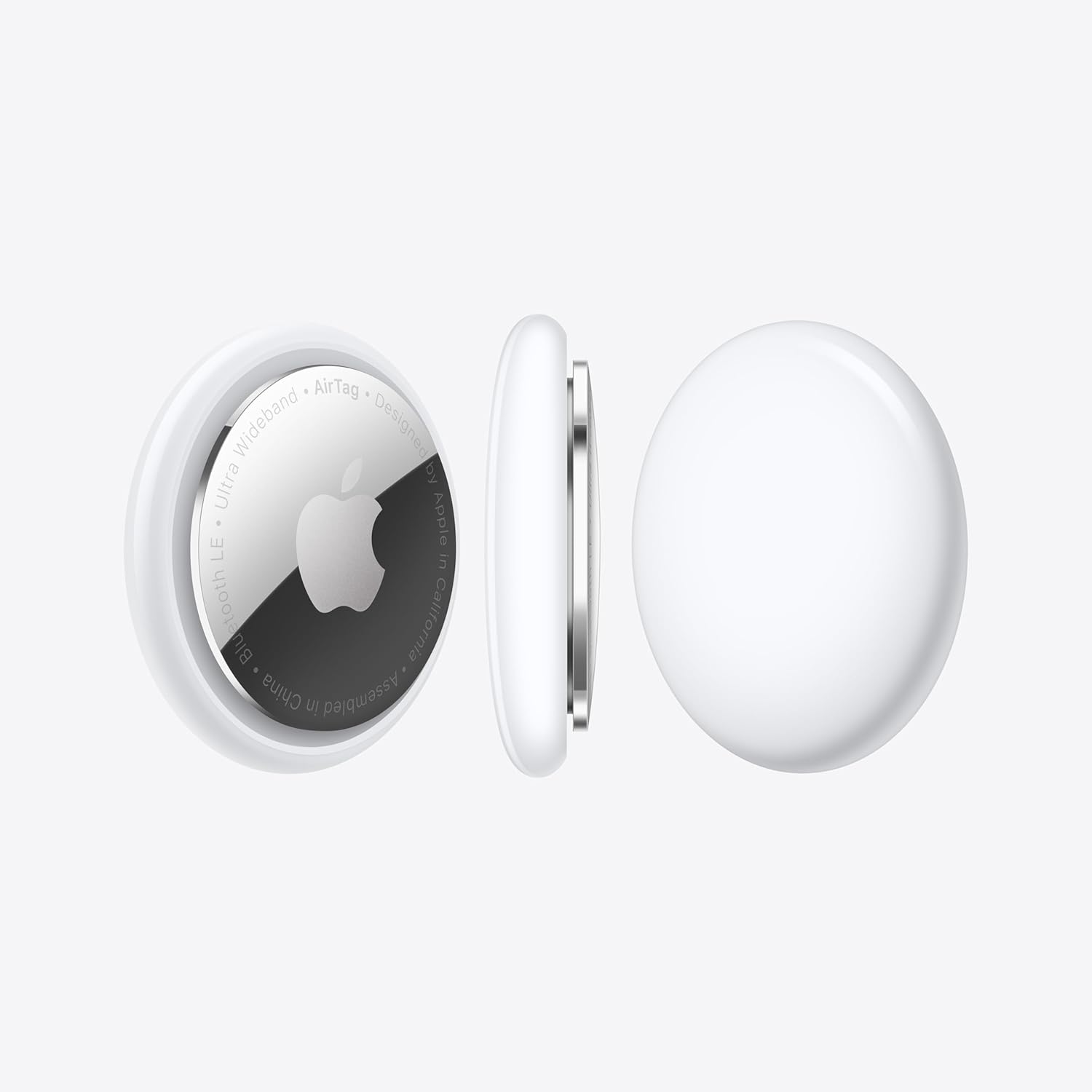
The AirTag arrives in a tiny, white, circular package, echoing the minimalist aesthetic of other Apple accessories. The device itself is a polished, stainless steel disc with a subtle Apple logo on one side. It’s remarkably compact and lightweight, about the size of a two-euro coin, making it unobtrusive for attachment. The official description emphasizes its IP67 water and dust resistance rating, meaning it can withstand being submerged in up to one meter of water for 30 minutes—crucial for protecting it from rain, spills, or the occasional tumble into a puddle. The lack of any built-in hole or attachment point is notable; users must purchase or provide their own keyrings, loops, or adhesive mounts, which adds a small but essential layer of customization and cost.
Seamless Integration: The Magic of One-Tap Setup
The advertised “simple one-tap setup” is not an exaggeration. For anyone within the Apple ecosystem—owning an iPhone or iPad running a contemporary iOS or iPadOS version—the process is remarkably frictionless. Removing the plastic tab from the AirTag’s battery automatically triggers a connection prompt on the nearby Apple device. You simply tap “Connect,” assign the AirTag to a named item (e.g., “Keys,” “Backpack,” “Luggage”), and optionally choose an emoji. It’s a masterclass in user-friendly setup, taking under a minute and requiring no manual Bluetooth pairing or app installation beyond the pre-existing Find My app. This out-of-box experience sets the tone for the entire product: it’s designed to “just work.”
Core Functionality: Sound, Siri, and Precision
Once attached and named, the AirTag becomes an active participant in your Find My network. Its primary functions are elegantly straightforward:
- Audible Location: From within the Find My app, you can command the AirTag to play a sound from its built-in speaker. The chirp is clear and moderately loud, sufficient to locate a bag under a couch or keys in a cluttered bag. Crucially, if you’re nearby but can’t hear it, you can simply ask Siri, “Hey Siri, find my backpack,” and your iPhone will trigger the sound remotely.
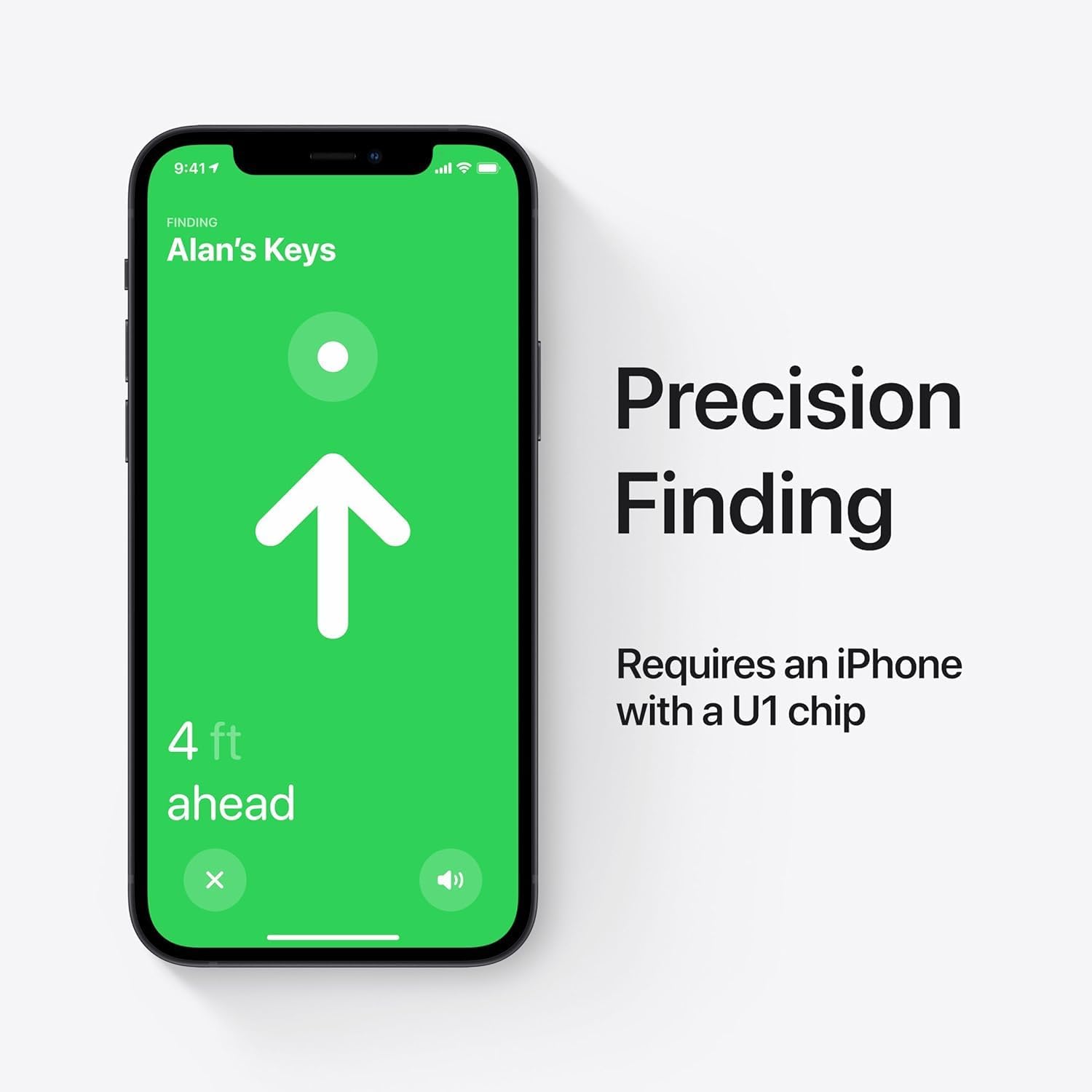
- Precision Finding (UWB): This is the feature that truly differentiates the AirTag from cheaper Bluetooth trackers, but with a significant caveat. It requires a compatible iPhone (iPhone 11 or later with Ultra Wideband chip). When you’re within Bluetooth range (approximately 30-50 feet), Precision Finding uses Ultra Wideband technology to provide incredibly precise, distance and direction-based guidance on your iPhone’s screen. An arrow and distance meter lead you directly to the AirTag, navigating around obstacles. It transforms searching from a ringing-game process into a guided treasure hunt, feeling almost like science fiction. For users without a compatible iPhone, this advanced feature is unavailable, reducing the tracker to a standard Bluetooth finder.
The Crowd-Sourced Network: Finding Things Far, Far Away
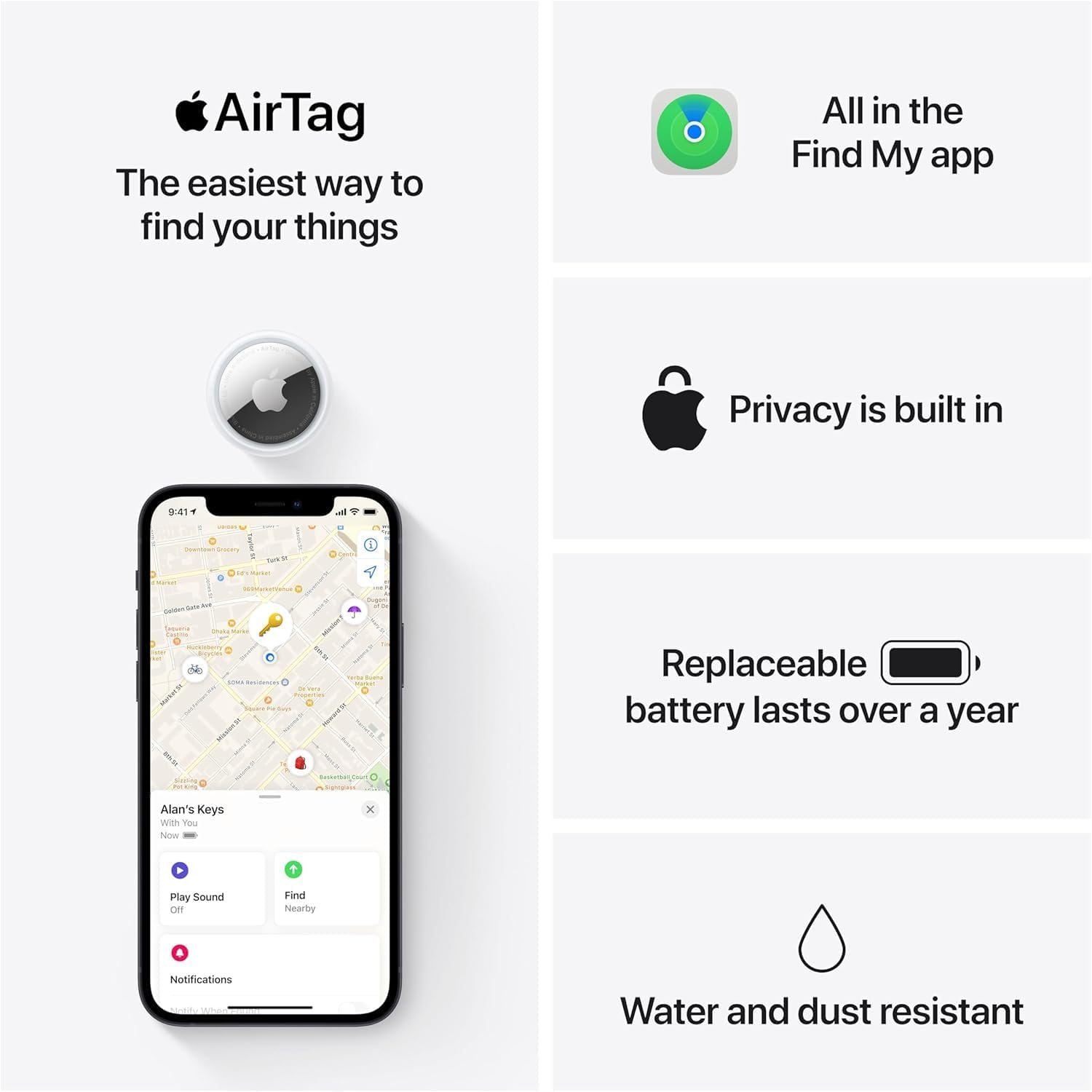
The most powerful and unique aspect of the AirTag is its utilization of the Find My network. This is a vast, anonymous, peer-to-peer network comprising hundreds of millions of Apple devices worldwide. If you mark an AirTag as lost and it moves out of your direct Bluetooth range, it can still be located if it comes within Bluetooth range of any other Apple device. That device, be it an iPhone, iPad, or Mac, will discreetly and anonymously upload the AirTag’s location to iCloud, which you can then see in your Find My app. Your privacy is protected; the network is end-to-end encrypted, and location data is never stored on the AirTag itself. This creates an unparalleled, global lost-and-found system. For a misplaced suitcase in an airport, a stolen backpack in another city, or a wallet dropped on a bus, this network is the AirTag’s killer feature, turning every iPhone user into a potential, unknowing helper.
Lost Mode and Sharing: Collaborative Security
The description highlights two collaborative features that enhance utility in family or shared-item scenarios:
- Sharing: You can share an AirTag with up to five other people in your Family Sharing circle. This is ideal for tracking a family pet’s collar, a shared vehicle’s keys, or a communal toolkit. All members can see the item’s location in their Find My app and trigger sound playback.
- Lost Mode with Notification & Contact Sharing: When you place an AirTag in Lost Mode, you can provide a contact phone number and a message (e.g., “Please call this number if found”). Crucially, if any device on the Find My network detects your lost AirTag, you receive a notification with its approximate location. Furthermore, you can share the AirTag’s location updates with a third party, such as an airline’s baggage service, giving them a dynamic tracking link to aid in recovery. This moves beyond simple notification into active recovery coordination.
Privacy and Security: Anonymous by Design
Apple has notably baked privacy into the AirTag’s core architecture, a response to concerns about stalking. As stated, all communication with the Find My network is anonymous and encrypted. The AirTag itself relays no identifying information. Furthermore, to prevent unwanted tracking, iPhones running iOS 14.5 or later will detect an unknown AirTag that is separated from its owner and traveling with them. They will receive a notification alerting them that an “Unknown AirTag” is moving with them over time, and can play a sound to locate it. This anti-stalking measure is a critical and responsible design choice.
Battery Life and Durability: Built to Last
The AirTag uses a standard, user-replaceable CR2032 coin cell battery. Apple claims it lasts “over a year” with typical usage. The battery door is easily twistable for replacement, a rare advantage over some competitors with sealed batteries. The IP67 rating provides solid daily protection against splashes, dust, and brief submersion, making it suitable for keys, backpacks, and luggage. However, for constant exposure to harsh environments (e.g., scuba diving, sandy beaches for days), additional protective casing is advisable.
The 4-Pack Value Proposition
Purchasing the AirTag in a four-pack is the most sensible entry point. The individual utility of a single tracker is limited—it’s best for one high-value or frequently misplaced item. A four-pack allows you to outfit your most common “loss vectors”: keys, wallet/ purse, everyday backpack, and a suitcase or musical instrument case. The shared tracking feature also becomes more valuable within a household, enabling multiple family members to monitor shared assets like the car key fob or a pet’s collar. Economically, the pack offers a better per-unit price, making the initial investment in the ecosystem more palatable.
Considerations and Limitations
No product is without trade-offs. The AirTag is intrinsically tied to the Apple ecosystem; Android users can only use it as a simple NFC tag to access a Lost Mode message, missing all tracking functionality. Its small size, while an advantage for portability, means you must rely on third-party accessories for secure attachment, adding cost and bulk. The Precision Finding feature is exceptional but requires a newer, higher-end iPhone, locking this premium experience behind a hardware paywall. Finally, as a first-generation product, it lacks some minor refinements found in newer models, like a built-in speaker hole for potentially louder sound or a slightly smaller form factor.
Conclusion: A Essential Tool for the Apple Faithful
The Apple AirTag (1st Generation) 4-Pack is not a revolutionary piece of hardware in isolation; it is a brilliantly executed node in a revolutionary network. Its success hinges entirely on the scale and sophistication of the Find My ecosystem. For iPhone and iPad users, it delivers on its core promise with near-flawless execution: effortless setup, reliable proximity finding via sound and UWB, and the game-changing potential of a global, privacy-centric crowd-sourced recovery network. The four-pack magnifies its value, allowing for comprehensive coverage of your essential items and enabling family sharing.
While it has platform dependencies and requires accessory purchases, its strengths are overwhelming. It turns the anxiety of losing something into a manageable, trackable problem. In the hands of an Apple device owner, the AirTag transcends being a mere keyfinder—it becomes a affordable, powerful insurance policy against the everyday chaos of losing things. For anyone entrenched in Apple’s world who has ever uttered the phrase “Where are my keys?,” the four-pack of AirTags is not just a recommended purchase; it is a logical and highly practical upgrade to a more organized, less stressful life.