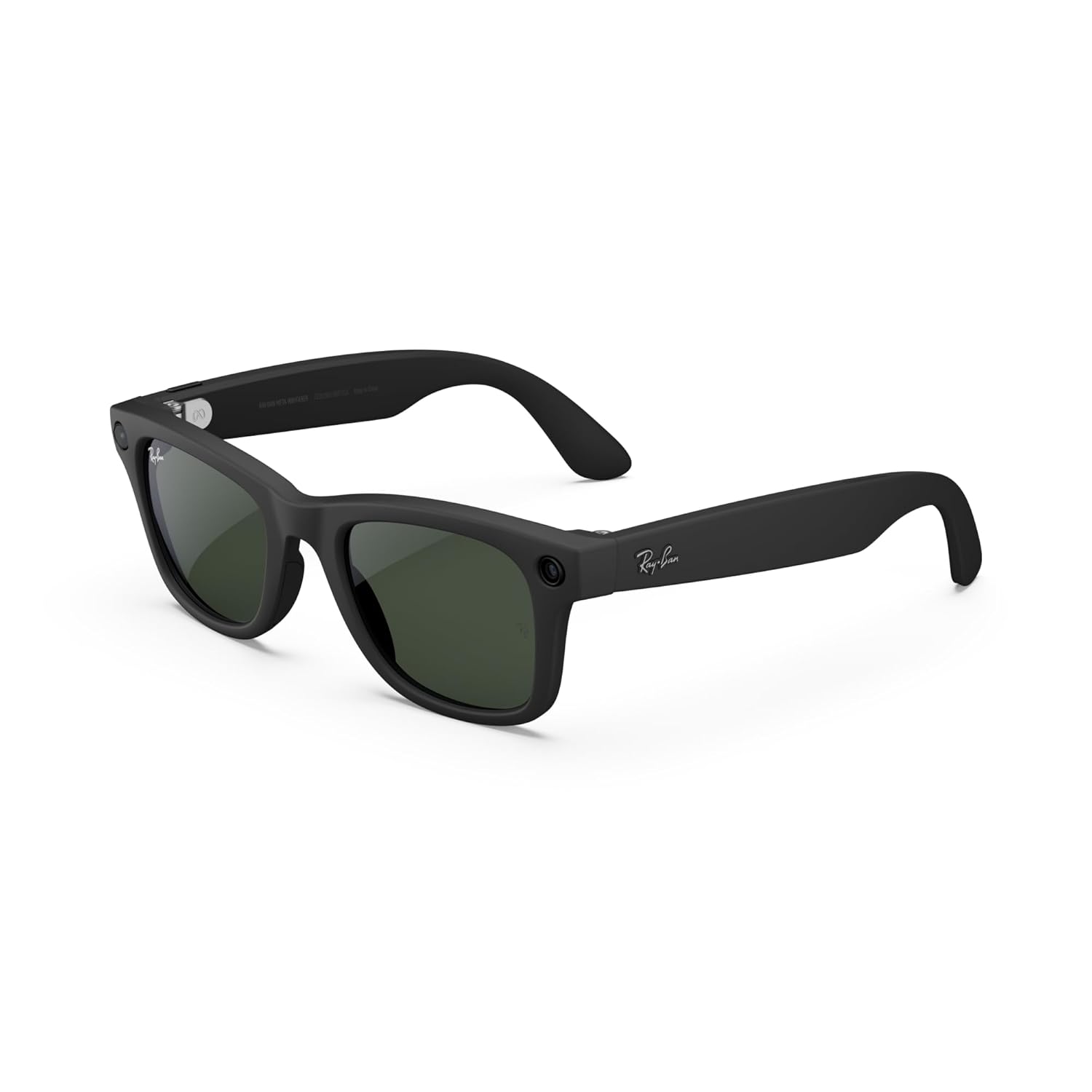
Ray-Ban Meta (Gen 1), Wayfarer, Matte Black | Smart AI Glasses for Men, Women —12 MP Camera, Open-Ear Speakers for Audio, Video Recording and Bluetooth —Transitions® Green Lenses —Wearable Technology





Price: $379.00
(as of Mar 20, 2026 02:05:19 UTC – Details)

Ray-Ban Meta (Gen 1) Wayfarer: A Fusion of Iconic Style and Cutting-Edge Wearable Tech
In a market saturated with fleeting tech trends, the Ray-Ban Meta (Gen 1) glasses, presented here in the classic Wayfarer silhouette with Matte Black frames and Transitions Green lenses, arrive with a compelling promise: to merge legendary, timeless design with genuinely useful, integrated smart technology. They are not merely a gadget disguised as eyewear, but a deliberate attempt to create a piece of wearable technology that feels as natural and essential as the sunglasses it emulates. This review delves into the reality of that fusion, examining whether these “smart AI glasses” successfully deliver on their ambitious marketing to help users “move effortlessly through life.”
Design and Form Factor: Masterclass in Discretion
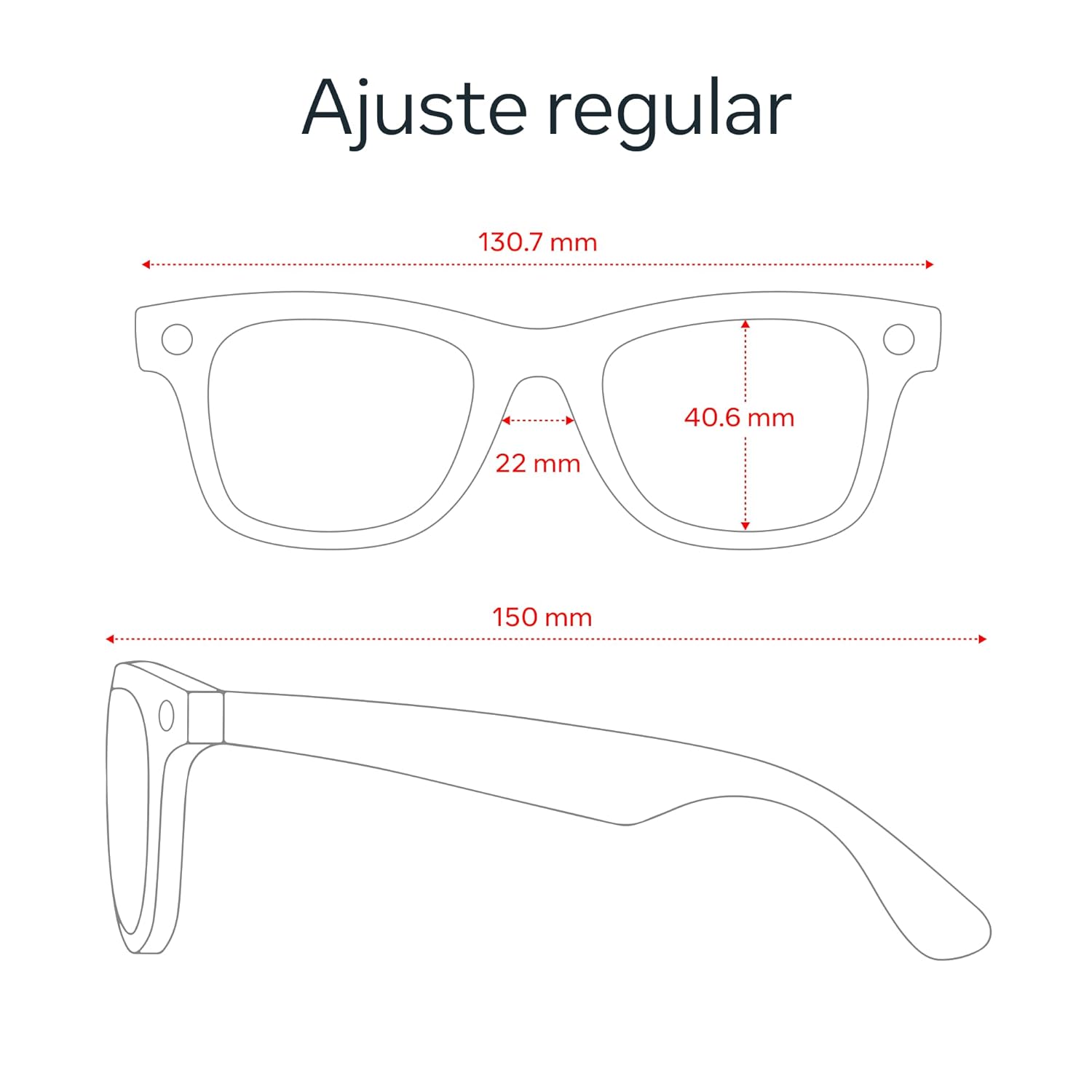
The genius of the Ray-Ban Meta starts with its foundational identity. Eschewing the often bulky, clinical look of earlier smart glasses, these are, first and foremost, a pair of Ray-Bans. The Wayfarer shape is arguably the most recognizable sunglass frame in history. Clad in a subtle matte black finish, they possess a familiar, approachable aesthetic that doesn’t scream “technology.” The integration of the hardware is remarkably discreet. The cameras, speakers, and sensors are embedded seamlessly into the arms and bridge, maintaining the clean lines of the original design. The fit is indeed slim and comfortable for extended wear, a critical factor for any device meant for all-day use. The inclusion of Transitions Green lenses adds a layer of practical adaptability, automatically adjusting from clear indoors to protective tint outdoors, further cementing their role as a primary pair of glasses rather than a niche accessory. This commitment to fashion-first design is the product’s most significant strength, lowering the social barrier to entry for wearable tech.
Audio and Camera: Hands-Free Capture and Communication
At the heart of the user experience are two core hardware features: the audio system and the 12-megapixel camera. The open-ear speaker design is a standout. By delivering audio directed toward the ears without occluding the ear canal, the glasses allow for a safe, situational-awareness-friendly listening experience. Users can enjoy music, podcasts, or audiobooks while still hearing ambient sounds—a crucial feature for urban navigation or cycling. The audio quality, while not audiophile-grade, is surprisingly rich and full for the form factor, with adequate volume for most environments. The five-microphone array is equally impressive, enabling clear voice pickup for calls and voice commands, effectively suppressing wind noise in many scenarios.
The 12MP ultra-wide camera is the visual counterpart. Its primary function is hands-free, first-person point-of-view (POV) capture. The quality is more than sufficient for social media sharing, casual vlogging, or documenting a moment without disrupting the flow of an experience. The “Share your POV” feature, which allows a call recipient to see through your glasses, is a genuinely innovative application of this hardware, transforming a simple video call into an immersive collaborative tool. The ability to seamlessly flip between the phone’s main camera and the glasses’ camera in supported apps like Instagram and Facebook is a smooth, well-executed integration that feels magical in practice. Livestreaming directly from the glasses further extends its utility for content creators.
The Brain: Meta AI and Real-Time Intelligence
The “smart” in these AI glasses is predominantly manifested through Meta AI and a suite of context-aware features. Activated via a wake word (“Hey, Meta”) or a touch pad on the arm, Meta AI is positioned as an on-the-go assistant. Its most touted capability is analyzing your immediate surroundings to offer context-rich suggestions. In practice, this means pointing the glasses at a landmark and asking about it, or looking at a menu and requesting a summary or translation. The execution is smooth, but the utility is highly dependent on the accuracy of the visual recognition and the breadth of the knowledge base.
The most practically powerful feature, however, is the real-time translation function. The ability to hear translations of spoken language in near real-time between a growing list of languages (French, Italian, Spanish, English, German, Portuguese, etc.) without needing a Wi-Fi connection is a game-changer for travelers. This leverages both the glasses’ microphones and audio playback system to create a discrete, almost sci-fi communication bridge. It represents a tangible, high-value use case for wearable tech that a smartphone simply cannot match in terms of hands-free, conversational fluidity.
Connectivity and Ecosystem: A Phone-Dependent Companion
It is crucial to understand that the Ray-Ban Meta glasses are not a standalone device. They are a sophisticated peripheral that requires a constant Bluetooth connection to a nearby smartphone (iOS or Android). All processing, AI queries, and data transmission rely on the paired phone’s connectivity and power. This means no independent cellular functionality, no onboard app store, and no operation outside the phone’s Bluetooth range. For the core functions—making and receiving calls, sending dictated text messages, streaming music from the phone, and using Meta AI—this dependency is seamless. The glasses act as a powerful, always-accessible remote input/output device for your phone, removing the need to physically pull it from your pocket. This “hands-free hub” model works brilliantly within its defined scope but clearly delineates the product’s capabilities and limitations.
Privacy: Control in Your Hands (and on Your Face)
Given the embedded camera and microphones, privacy is a paramount concern, and Ray-Ban has built controls directly into the user experience. The glasses feature a physical capture LED that illuminates whenever the camera is active, providing a clear visual indicator to bystanders. Within the companion app, users have granular control: they can disable the camera entirely, turn off the microphone for voice commands, and manage data sharing preferences. The wake word for Meta AI can also be deactivated. This puts the user firmly in control of when the device is “listening” or “seeing,” addressing a key social anxiety surrounding wearable cameras. However, the long-term implications of data handling by Meta remain a separate, broader conversation that extends beyond the device’s immediate hardware controls.
The Verdict: A Groundbreaking First Step
The Ray-Ban Meta (Gen 1) Wayfarer is a landmark product. It successfully avoids the common pitfall of wearable tech looking like a prototype. Instead, it delivers a stylish, comfortable pair of glasses that happen to have powerful, well-integrated smart features. The open-ear audio is excellent for situational awareness, the 12MP POV camera is fun and functional, and the real-time translation is a killer app. Meta AI feels like a glimpse of the future, though its utility can be inconsistent.
Its limitations are clear: the heavy reliance on a paired phone, battery life that requires regular charging (typically around 3-4 hours of mixed use), and a feature set that, while deep, is not yet exhaustive. This is not a device that replaces your phone; it is a brilliant extension of it for specific, mobility-focused moments.
For the tech-savvy individual who values style and discrete utility, and for travelers or content creators who can leverage the POV and translation features, the Ray-Ban Meta glasses offer a unique and compelling proposition. They are a confident first generation that sets a new standard for what smart glasses can and should be: invisible in appearance, intuitive in use, and genuinely augmentative to daily life, rather than a distraction from it. They prove that the future of wearable technology can, and perhaps should, look remarkably familiar.