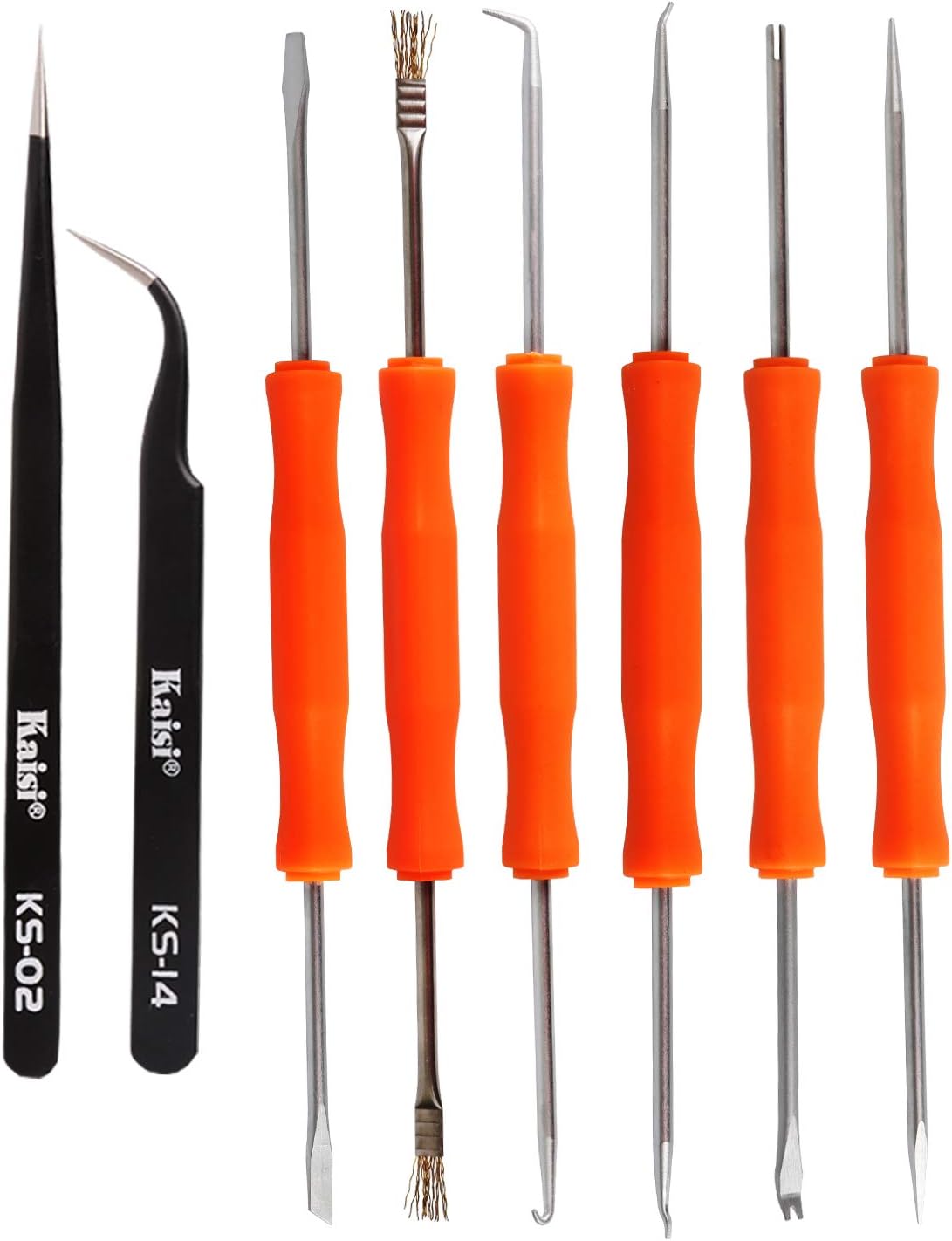
Kaisiking 6 Pcs Double Sided Soldering Assist Aid Repair Tool with 2 Precision Tweezers for Electronics Repair and Soldering



Price: $9.99
(as of Mar 20, 2026 12:15:41 UTC – Details)

The Kaisiking 6-Piece Double-Sided Soldering Assist Aid Kit: A Comprehensive Workbench Companion for Precision Electronics Work
For anyone engaged in the meticulous work of electronics repair, prototyping, or intricate soldering projects, having the right ancillary tools is just as critical as possessing a quality soldering iron. The Kaisiking 6 Pcs Double Sided Soldering Assist Aid Repair Tool kit, complemented by two precision tweezers, presents itself as a foundational accessory set designed to enhance control, precision, and efficiency at the soldering station. Based exclusively on its stated design and specifications, this kit aims to be an all-in-one solution for the myriad of supporting tasks that surround the primary act of melting solder.
Unpacking the Arsenal: What’s in the Kit?
The package contents are clearly defined: six double-sided soldering assist tools and two precision tweezers. The core innovation lies in the “double-sided” nature of each of the six primary tools. This means each physical tool is essentially two tools in one, with a different functional tip on each end of a single, central handle. This design philosophy prioritizes workspace efficiency, reducing the need to constantly swap single-purpose tools and keeping a tidy, organized benchtop. The two additional tweezers are separate, dedicated instruments for the ultra-precise manipulation of tiny components.
Design and Ergonomics: A Handle Built for Control
Kaisiking emphasizes the ergonomic design of the handles. While exact dimensions aren’t provided, the description states they are “in line with ergonomic design, [offering a] comfortable feel.” This suggests a focus on user comfort during prolonged repair sessions, aiming to reduce hand fatigue. A comfortable grip is paramount for tools that require delicate, controlled movements. The handles are likely contoured or textured to provide a secure hold, even if the user’s hands are slightly sweaty or if they are wearing thin gloves. This design consideration is not merely about comfort; it directly impacts the steadiness of the hand and, consequently, the precision of the operation being performed.
The Heart of the Kit: The Double-Sided Assist Tools
Each of the six tools is a multipurpose instrument. The tips are specified as “specially hardened,” a crucial feature for any tool that will come into contact with hot solder,PCB boards, and component leads. Hardened tips resist deformation, maintain their precise shape over time, and can withstand the thermal abuse of being placed near a soldering iron without becoming soft or marred. This ensures a long service life and consistent performance.
The kit is engineered to meet a comprehensive range of “welding operation requirements,” explicitly mentioning pressing, cutting, scraping, hooks, and brushes. The six tools, with their twelve unique tips, cover these functions:
- Positioning Terminal / Fork: Likely a forked or pronged tip designed for the critical task of holding and precisely positioning tiny surface-mount device (SMD) components, such as resistors or capacitors, onto their designated pads on a PCB before soldering. It can also be used to hold and adjust component leads or thin wires.
- Brush: A fine-bristled brush tip, perfect for the essential pre-soldering step of cleaning. It can effectively sweep away dust, debris, and residual flux from a PCB pad or component lead, ensuring a clean joint. Post-soldering, it can also be used to clean around a freshly made joint.
- Awl: A sharp, pointed tip used for cleaning out blocked solder vias (the tiny holes in multi-layer PCBs) or for gently expanding a pad hole that has become slightly constricted, allowing solder to flow through properly.
- Scraper: A flat, hardened blade tip. Its primary uses are for removing old, stubborn solder and flux residues from pads during desoldering or rework. It is also ideal for scraping away the oxide layer that can form on the “fingers” or contacts of connectors and edge connectors, restoring a clean, solderable surface.
- Hook: A curved, hook-like tip. This is exceptionally useful for “hooking” or manipulating individual component pins or fine wires, especially in dense or hard-to-reach areas. It can also be used to lift or move small parts.
- The Second Brush or Alternative Tip: The description implies a complete set covering all needs. The second side of one tool might offer a different style of brush (e.g., a brass wire brush for tougher oxidation) or another specialized tip like a more delicate probe or a secondary scraper profile, rounding out the toolkit’s versatility.
The value of this multi-tool approach is in its flexibility. A technician can quickly flip a tool in their hand to switch from scraping a pad with a scraper to brushing it clean with the brush, without ever putting the tool down. This streamlines workflow and minimizes context-switching.
The Precision Tweezers: Mastering the Minuscule
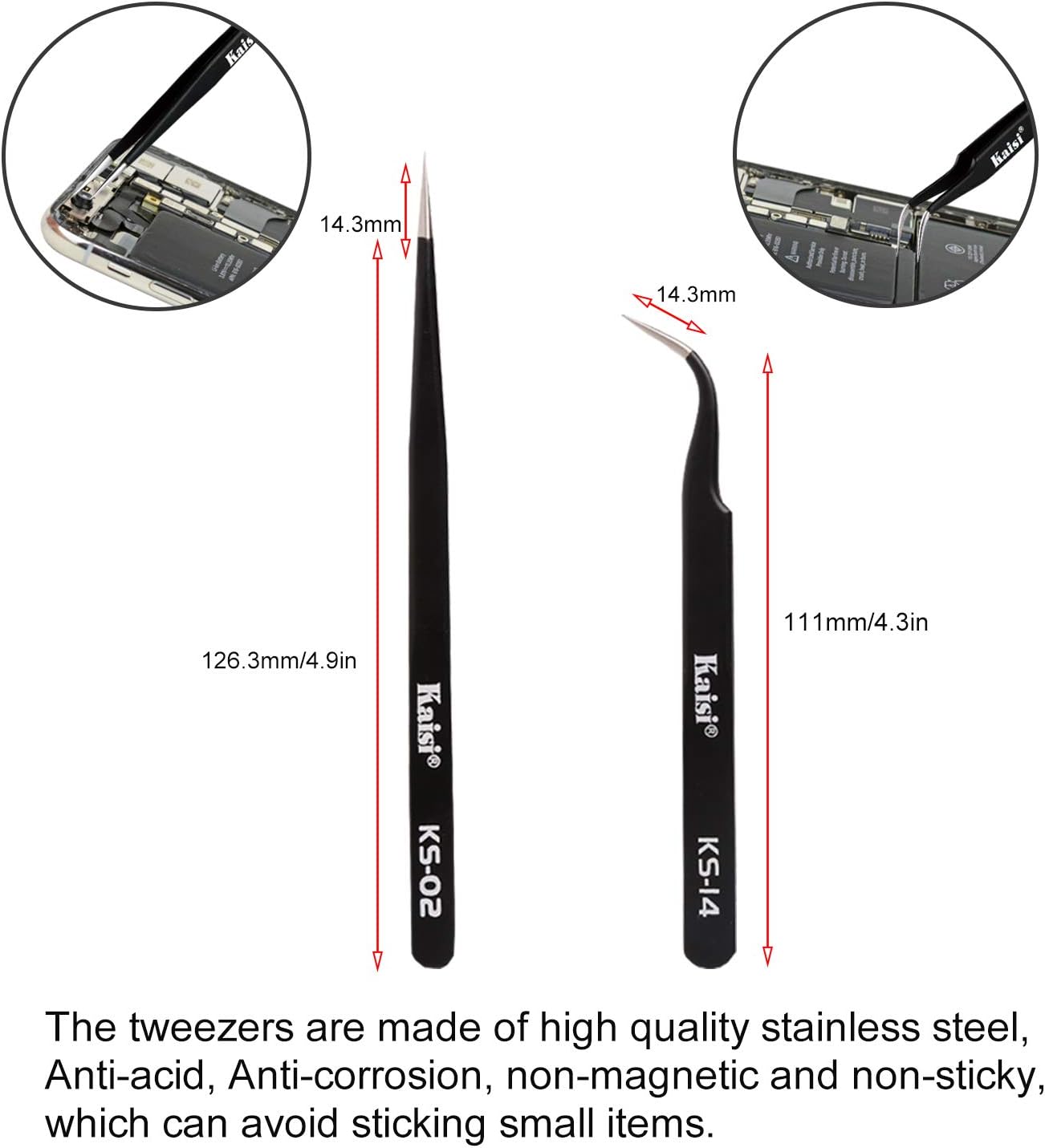
The inclusion of two dedicated precision tweezers significantly elevates the kit’s utility for SMD work. Made from “high-quality stainless steel,” they are specified as anti-acid, anti-corrosion, non-magnetic, and non-sticky. These are not just marketing terms but critical specifications for electronics work:
- Anti-acid & Anti-corrosion: Ensures the tweezers won’t rust or degrade from exposure to flux residues, which are often acidic.
- Non-magnetic: Absolutely essential when working with sensitive components or in environments where magnetic fields could affect performance (e.g., certain sensors, CRTs, or during precision alignment).
- Non-sticky: The tips are engineered to not adhere to small components, a common frustration with lower-quality tweezers that can make placing a 0402 resistor a maddening task.
The description further notes that “the tip is precision machined for exact alignment and a perfect grip at the tips.” This means the two arms of the tweezers meet flawlessly, providing a secure, consistent grip on microscopic parts without slippage. Perfect alignment is non-negotiable for reliably picking up, placing, and holding components that are barely visible to the naked eye. Having two tweezers in the kit is a thoughtful touch, allowing for one to be used for a specific task (e.g., one with finer tips for the smallest components) while the other serves a different purpose, or as a spare.
Synthesis: Who is This Kit For?
This Kaisiking kit is not a soldering iron or a desoldering pump; it is a support system. It is ideally suited for:
- Hobbyists and Makers: Anyone building projects on perfboard or PCBs will find the positioning and cleaning tools indispensable.
- Electronics Repair Technicians: From fixing smartphones and laptops to repairing vintage equipment, the scraper, awl, and hook are daily drivers for diagnostics and rework.
- Students and Educators: A cost-effective way to equip a lab or workspace with all the necessary supporting tools for learning soldering and PCB assembly.
- Prototypers: Individuals rapidly assembling and testing circuit designs need to move quickly between cleaning, positioning, and adjusting components.
Final Assessment: A Focused, Functional Toolkit
Based on its declared features and construction, the Kaisiking 6-Piece Double-Sided Soldering Assist Aid Repair Tool kit with 2 Precision Tweezers appears to be a deliberately designed and practical collection. Its strengths lie in its thoughtful consolidation of functions via double-ended tools, its emphasis on durable, hardened tips, and the inclusion of high-specification, non-magnetic tweezers. It directly addresses the common pain points of electronics work: the need for clean surfaces, precise component placement, and careful manipulation in tight spaces.
While it doesn’t replace premium, single-purpose tools for professional, high-volume production environments, for the vast majority of repair work, prototyping, and hobbyist projects, it offers excellent value and comprehensiveness. It provides a ready-to-go solution for the “everything else” that surrounds the soldering iron, making it a smart and likely very frequently reached-for addition to any electronics workbench. The kit promises, and by its design seems capable of, delivering on its core mission: to assist, aid, and repair with greater control and convenience.
![Electronic Wipes Screen Cleaner Streak-Free [2 Pack x40] Computer Screen Wipes, TV Screen Cleaner Wipes, Monitor Wipes for Smart TV, Laptop, iPhone, ipad and more – [Microfiber Cloth + 80 Wipes]](https://m.media-amazon.com/images/I/71bke0Dr43L._AC_SL1500_.jpg "Electronic Wipes Screen Cleaner Streak-Free [2 Pack x40] Computer Screen Wipes, TV Screen Cleaner Wipes, Monitor Wipes for Smart TV, Laptop, iPhone, ipad and more – [Microfiber Cloth + 80 Wipes]")


