
Champion Workhorse Electronic Trap






Price: $369.99
(as of Mar 20, 2026 10:57:03 UTC – Details)

Champion Workhorse Electronic Trap: A Paradigm Shift in Portable Clay Target Sports
For decades, the world of organized clay target shooting—whether for recreational practice, competitive training, or hunting dog work—was segmented by a stark equipment divide. On one side stood the traditional hand-thrower, a relatively simple, low-tech, and ultra-portable option requiring a dedicated thrower. On the other loomed the electronic trap: a powerful, consistent, and often liberating machine that promised high-volume shooting but came with significant baggage. That baggage was typically two-fold: a formidable footprint that often required a dedicated vehicle or trailer for transport, and a price tag that placed it firmly in the realm of serious clubs or wealthy enthusiasts. The Champion Workhorse Electronic Trap has, quite simply, shattered that paradigm. It is not merely an affordable electronic trap; it is a meticulously re-engineered tool that extracts the core, indispensable benefits of electronic target throwing and repackages them into a format that fundamentally changes who can access this level of practice and where they can use it.
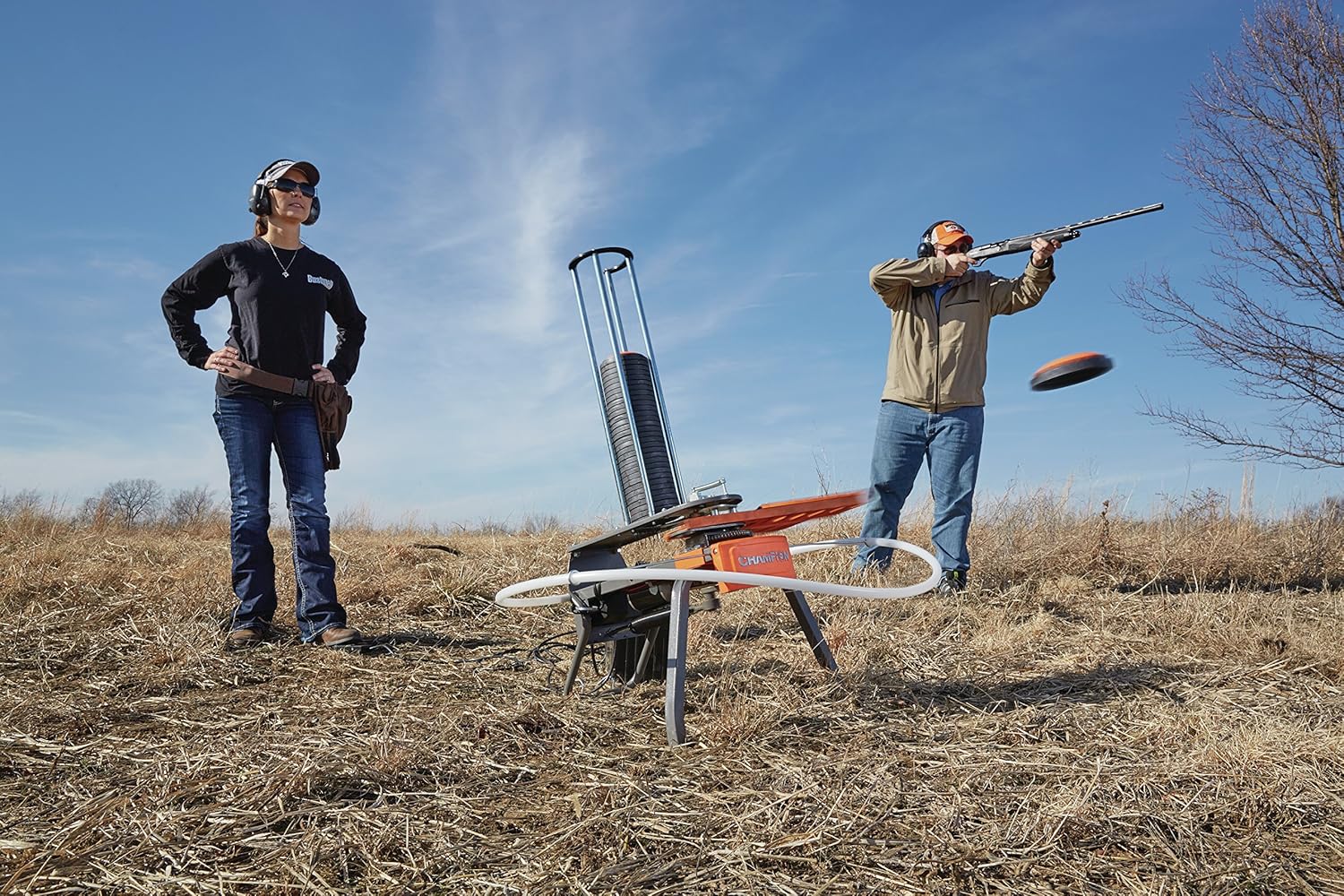
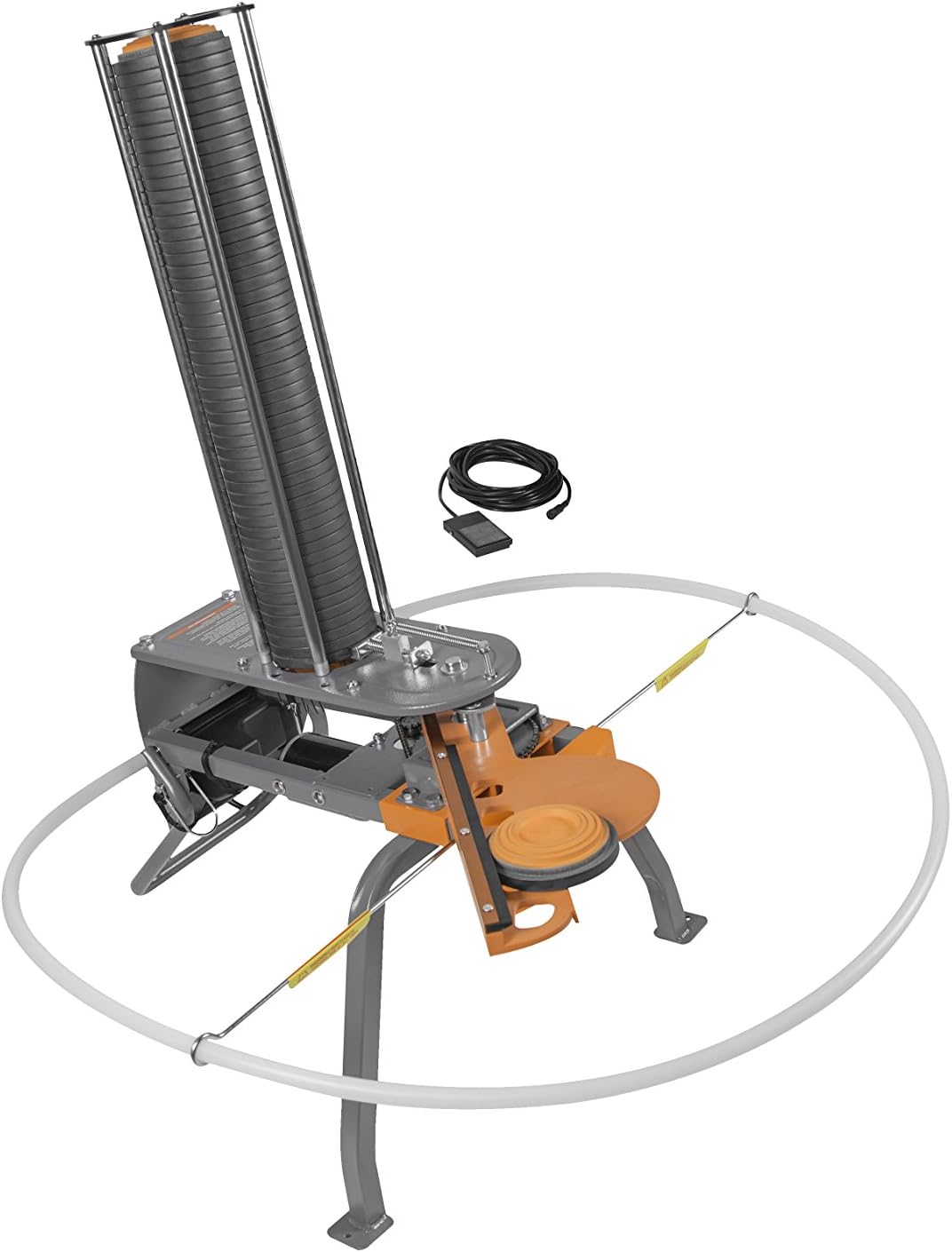
The most immediate and revolutionary aspect of the Workhorse is its philosophy of portable power. The description’s claim that it “fits in the trunk of most any vehicle” is a quiet bombshell in the shooting sports community. Previous high-capacity electronic traps were garage or range-bound assets. Their setup involved ramps, heavy bases, and often two people wrestling with components. The Workhorse inverts this model. Its “compact design” is not an afterthought but the central tenet of its engineering. By integrating the throwing mechanism, the magazine housing, and the power system into a single, cohesive unit that collapses or folds with a clear purpose, Champion has created a true grab-and-go system. The implication for the user is profound logistical freedom. A weekend shooter can now legitimately consider loading this into the back of a sedan or SUV, heading to a remote field, public shooting area (where legal and safe), or a friend’s property, and be operational in minutes, alone. This removes the primary barrier of dedicated transport, democratizing access to electronic-level practice and making spontaneous sessions not just possible, but practical.
This portability, however, would be meaningless if it sacrificed the primary job of the machine: reliable, high-volume target delivery. Here, the “Workhorse” moniker is earned not through hype, but through functional specification. The “detachable magazine holds up to 50 clays” is a critical data point. A 50-clay capacity translates directly to uninterrupted shooting rhythm. The shooter is no longer interrupted every 5 or 10 throws to manually reload, a process that breaks concentration, disrupts timing, and eats into valuable practice time. Instead, the focus remains on the sequence, the mount, the swing, and the follow-through. The magazine’s detachability is a stroke of practical genius. It allows for pre-loading sessions at home—a task that can be done comfortably at a kitchen table—and a swift swap in the field when empty. This system respects the shooter’s time and mental flow, treating ammunition as a consumable resource to be managed efficiently, much like a photographer manages memory cards.
The capability to “throw them with three different launch angles up to 75 yards” elevates the Workhorse from a simple repeater to a versatile training instrument. This is where the machine’s utility extends far beyond casual plinking. The three launch angles—typically ranging from a steep, vertical “going away” for high-arcing targets to a low, flat “Angling” or “Crosser” presentation—simulate the full spectrum of real-world shotgunning scenarios. A hunter can practice flushing birds, crossing flight paths, or rising teal. A trap or skeet shooter can drill specific, challenging angles that mimic those on the range. The ability to consistently deliver targets at distances up to 75 yards is significant. It’s not just about range; it’s about the time the target is in the air, the required lead, and the shooter’s ability to maintain focus on a smaller, more distant object. This range capability forces the development of proper technique and follow-through, as gimmicky, point-and-shoot gestures will be ruthlessly exposed. The Workhorse, therefore, becomes a coach, demanding and reinforcing correct fundamentals through the sheer physics of its throws.
The assertion that it “can keep throwing clays until you run out of daylight or ammunition—whatever comes first” speaks to operational endurance and reliability. Electronic traps, by nature, remove the human element of fatigue and inconsistency from the throwing equation. But many are finicky, requiring careful leveling, precise adjustments, and can be susceptible to dirt, moisture, or jams from imperfect clay edges. The Workhorse’s design implies a focus on robust simplicity. Its compact nature means fewer complex linkages and adjustment points compared to larger, more feature-laden competitors. The goal appears to be not endless customization, but consistent, set-and-forget operation. You set your desired angle and range, load the magazine, and the machine executes its duty with mechanical predictability. This reliability is the bedrock of the “Workhorse” identity. It’s the tool you trust to perform flawlessly session after session, year after year, with minimal fuss. It is built for the grind of practice, not for being a centerpiece showpiece.
It is crucial to assess what the Workhorse is not, as this defines its perfect user. It is not a tournament-grade, programmable random-angle machine. It does not offer the dizzying array of pattern randomness or the extreme target speeds of elite competition traps. Its strength is not in mimicking the chaos of a registered skeet or trap round, but in providing consistent, repeatable presentations for skill building. Its genius lies in targeting the 80% of practice needs: drilling fundamental mechanics, building muscle memory for standard angles, and achieving high-volume repetition to engrain the subconscious elements of the swing. For the hunter patterning a new gun, the new shooter learning to mount and swing, the dog trainer needing a steady stream of marks, or the enthusiast wanting to get in a quick, effective solo session without a partner, the Workhorse is ideally, perfectly suited.
The design’s emphasis on “one person” setup and breakdown cannot be overstated. In the field, this is a force multiplier. It means the entire operation—unloading from the vehicle, positioning, adjusting the legs, setting the angle, loading the first magazine—is within the capability of a single individual. There is no waiting for a partner, no confusing coordination. This autonomy is empowering. It respects the shooter’s schedule and inclination, removing social or logistical dependencies from the practice equation.
In summary, the Champion Workhorse Electronic Trap represents a masterclass in focused design and market disruption. It identifies the essential, high-value functions of an electronic trap—consistent high-volume throws, multiple angles, long range, reliability—and rethinks every other aspect (size, weight, cost, complexity) around the goal of personal portability and accessibility. It delivers on its name: it is an affordable, no-excuses workhorse. It does not seek to be all things to all shooters, but it is excellently suited to its defined purpose. For anyone who has ever looked at the imposing bulk and price of traditional electronic traps and assumed that level of practice was out of reach, the Workhorse is not just an alternative; it is a revelation. It proves that the benefits of automated, high-repetition clay throwing are no longer the exclusive domain of clubs and professionals. They are now compact enough, simple enough, and affordable enough to be in the trunk of your car, ready to make you a better shooter wherever you choose to set up. It is, in the truest sense, a democratizing force in shotgun marksmanship.


