Pixel Digital Badge Pin with Audio – Electronic Smart E-Badge for Video with Sound, Touch Screen HD Photo Display with Large Storage, Perfect Anime Pin for Backpacks



Price:
(as of Mar 20, 2026 10:52:39 UTC – Details)

Pixel Digital Badge Pin with Audio: A Novelty Wearable That Marries Tech with Fandom
In an era where personal expression is increasingly digitized, the line between traditional accessories and smart gadgets continues to blur. Enter the Pixel Digital Badge Pin with Audio, an “Electronic Smart E-Badge” that promises to transform the humble backpack pin into a dynamic, multimedia billboard. Marketed as the “Perfect Anime Pin for Backpacks,” this device aims to merge the collectible charm of fandom merchandise with the allure of cutting-edge, wearable tech. But does this pixelated pledge of personality deliver a compelling performance, or is it a concept that outstrips its practical execution? This review delves into the specifics of the device, based solely on its stated features and design philosophy.
First Impressions: Form Factor and Build
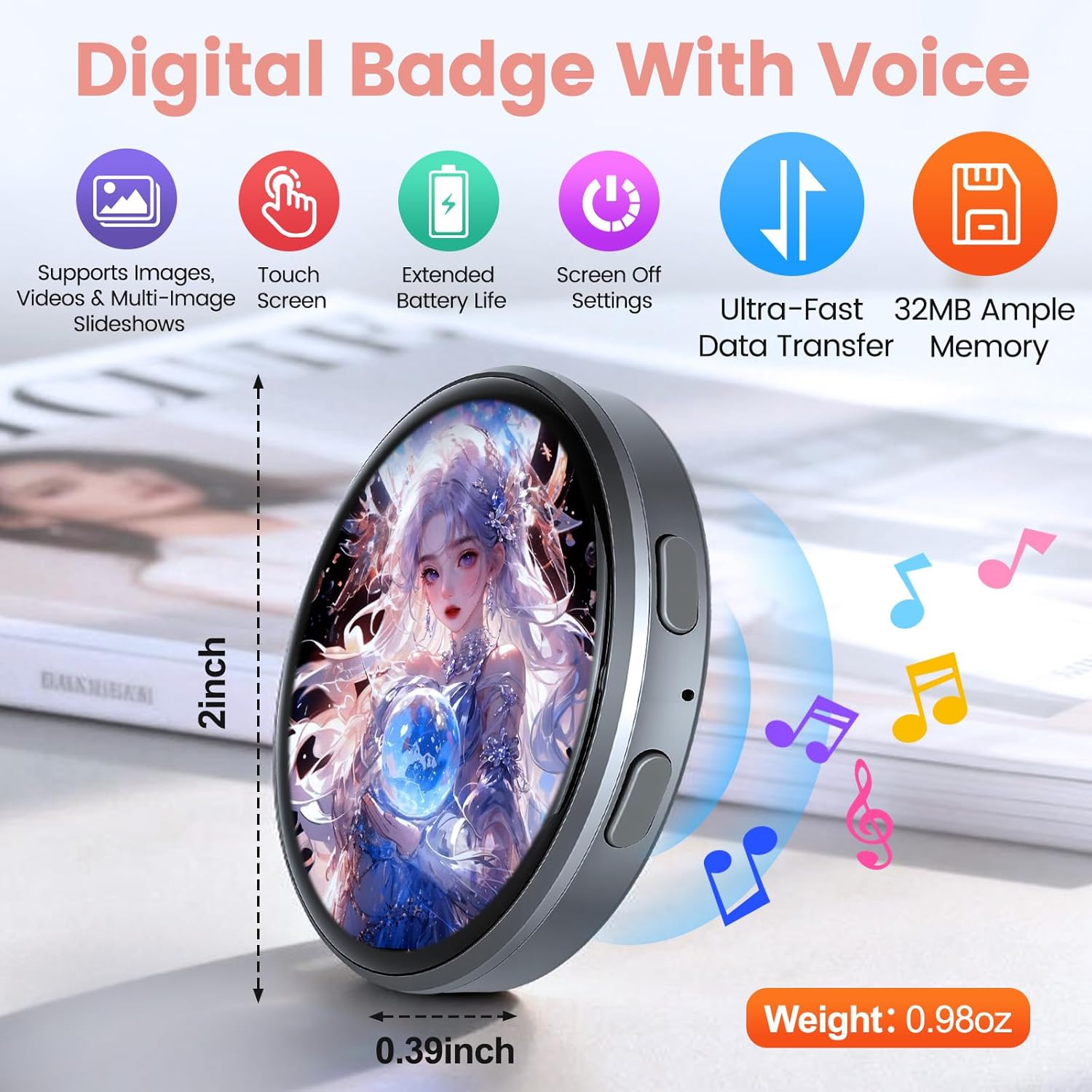
The initial selling point is its conceptual genius: a digital pin. At a mere 27 grams, it is exceptionally lightweight, fulfilling its promise as a comfortable, multi-scene companion. The design appears to focus on a classic pin profile, likely with a sturdy backing clip for secure attachment to backpack straps, lanyards, or fabric. This is a critical strength. Unlike bulky power banks or fragile smartphones, the badge’s purported lightweight construction means it adds negligible weight and burden, making it viable for daily carry by anime enthusiasts, convention-goers, and tech aficionados alike. The image assets suggest a sleek, modern rectangular screen housed in a plastic composite casing. The success of the product as a “pin” hinges on durability—will the clip withstand the rigors of daily bag use, and is the screen adequately protected from scratches? While the description emphasizes comfort and versatility, it remains silent on build robustness, which is a significant question mark for an item meant to be displayed on the move.
The Core Experience: Display, Storage, and the App Ecosystem
The heart of the Pixel Digital Badge is its touch screen HD photo display capable of playing videos with sound. The specification of 32MB of onboard storage is the product’s most defining—and most restrictive—feature. The manufacturer states this allows for “approximately 70-100 images or multiple short videos.” In 2024, 32MB is minuscule. This isn’t a limitation to be overlooked but the central constraint of the entire user experience.
To put this in perspective: a single modern 12MP smartphone photo, at standard quality, can be 3-5MB. A 10-second video clip, even at low resolution, can easily consume 5-10MB. Therefore, the badge is engineered for a curated, miniature gallery—a handful of favorite character art, a few short looping clips, or perhaps one longer, compressed video. The promise of a “dynamic digital badge photo video display” is thus tempered by a reality of severe capacity. Users must be extreme minimalists, constantly managing and swapping content via the companion app. This isn’t a device for a sprawling collection; it’s for a rotating, highly selective showcase.
This leads to the second crucial pillar: the mandatory companion app. All content must be uploaded and “optimized” through this app, which converts files into a badge-compatible format. Direct transfer of standard JPGs, MP4s, or GIFs is explicitly not supported. This is a double-edged sword. On one hand, it ensures the device only runs files calibrated for its specific screen resolution and processor, potentially preventing crashes or poor playback. On the other, it creates a gated ecosystem. Users are locked into the manufacturer’s software workflow, which may feel restrictive or cumbersome compared to simply dragging and dropping files. The conversion process adds an extra step, and the storage calculation is based on these converted files, meaning the original file size is irrelevant—only the app’s output matters. This dependency is a major consideration for potential buyers who value seamless file management.
Smart Features: Power and Control
Where the Pixel Digital Badge shows genuine ingenuity is in its power management and control scheme. The “Smart Battery-Saving & Auto-Awake Display” is a clever solution to the challenges of a small battery in a wearable device. By automatically entering a low-power sleep mode and waking instantly with a shake, it conserves energy without making interaction tedious. This “shake-to-wake” mechanic is intuitive and feels suitably techy, aligning with the product’s “smart badge” persona.
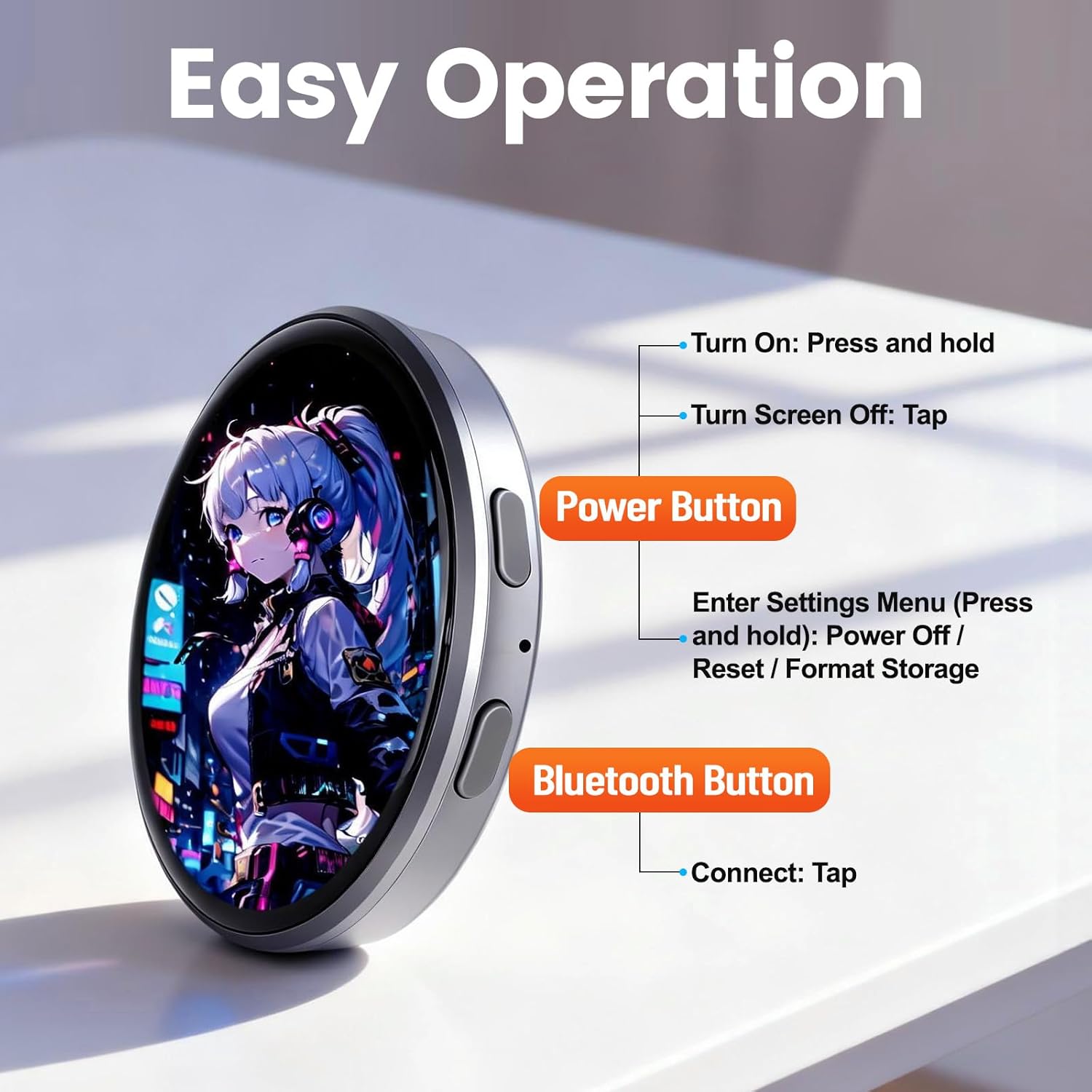
The “Intuitive Dual-Control Operation” combining tactile buttons with a responsive touch screen is a practical design. The buttons likely handle core functions like power, mode switching, or playback control, while the touch screen enables menu navigation and content selection. This redundancy is smart—if the touch screen is unresponsive in cold weather or with gloved hands (a consideration for convention-goers), the buttons provide a fallback. The mention of a “detailed guide” is a positive note, suggesting the company anticipates a learning curve, which is reasonable for a device that sits at the intersection of fashion and tech.
Content and Audience: The “Perfect Anime Pin” Verdict
The ultimate question is whether this badge fulfills its promise as the “Perfect Anime Pin for Backpacks.” Here, the assessment is nuanced.
For the Fandom Enthusiast: The potential is immense. Imagine displaying a high-quality, official anime key visual on your bag instead of a static enamel pin. The ability to show a short, silent (or audio-capable) clip—a character’s signature attack, a memorable scene—is a powerful expression of fandom. The badge becomes a conversation starter, a digital collectible that feels uniquely personal. The 32MB limit, while tight, forces curation, which can lead to more meaningful, frequently rotated displays. For die-hard fans who attend cons, this could be a standout accessory that sets their bag apart from the sea of traditional pins.
For the General Tech Enthusiast: The appeal is more about the concept than the utility. As a wearable digital photo frame, it’s a fascinating proof-of-concept. The implementation of shake-to-wake and dual controls demonstrates thoughtful UX design for a niche product. However, its severely limited storage and app-dependent workflow make it feel less like a standalone gadget and more like a captive accessory. Without a compelling, constantly updated content library from the user, its novelty can wear off quickly.
The Audio Caveat
The title proudly boasts “Audio,” and the description confirms videos can “play with sound.” However, the execution details are absent. Is there a tiny speaker? A 3.5mm headphone jack? Bluetooth connectivity? The lack of specification here is a glaring omission. For a feature so highlighted, users need to know how sound is experienced. Is it a faint bleep from a minuscule speaker, or must users plug in headphones? This ambiguity significantly impacts the “video with sound” claim, especially for an item meant to be displayed publicly. If the audio is inaudible or requires wires, its utility as a “video” badge is drastically reduced to essentially a silent gif player.
Conclusion: A Curious Novelty with Clear Boundaries
The Pixel Digital Badge Pin with Audio is not a mainstream wearable tech product—it is a hyper-specific novelty item. Its success depends entirely on matching the user’s expectations to its stringent realities.
Strengths:
- Clever, lightweight “pin” form factor genuinely suited for backpacks and lanyards.
- Thoughtful power management with auto-sleep and shake-to-wake.
- Practical dual-control interface (buttons + touch).
- Fulfills a unique desire for dynamic, animated fandom expression.
Weaknesses & Considerations:
- Extremely limited 32MB storage dictates a minimalist, constantly managed content library.
- Mandatory app-based conversion creates a closed ecosystem and an extra workflow step.
- Unclear audio implementation undermines a key selling point.
- Build quality and screen protection remain unaddressed concerns for a bag accessory.
- Price-to-functionality ratio is unknown but likely high due to niche manufacturing.
Final Verdict: This is a product for a very specific person: the anime super-fan who values curated, digital collectibles and enjoys the process of managing a tiny media gallery as part of their fandom ritual. It’s for the individual who sees their backpack as a canvas and wants one animated element on it. It is not for anyone seeking a versatile digital photo frame, a robust gadget for storing memories, or a device with seamless file compatibility. If you understand and accept the 32MB ceiling and the app dependency as the price of admission for a truly novel way to wear your interests, the Pixel Digital Badge Pin is an intriguing piece of wearable tech art. Otherwise, it remains a clever idea trapped in a storage-sized cage. Prospective buyers must look closely at the app’s user interface and conversion quality in any available demos, as those factors will ultimately define whether the “dynamic display” looks crisp or pixelated.