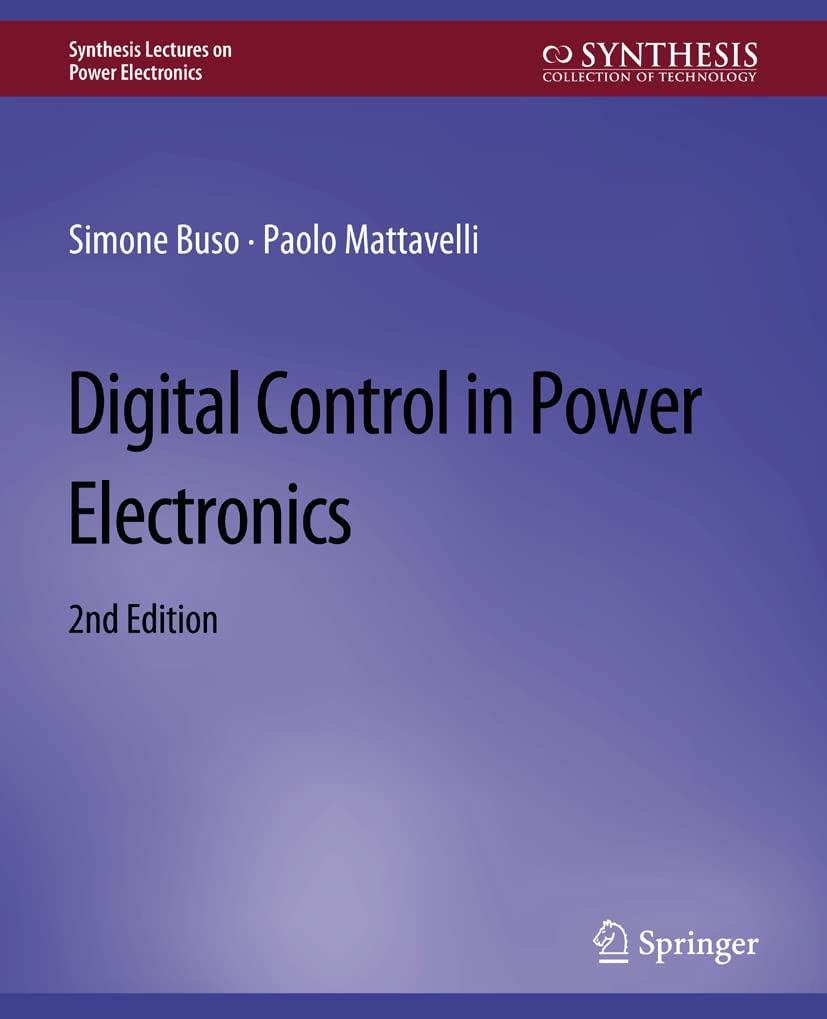
Digital Control in Power Electronics, 2nd Edition (Synthesis Lectures on Power Electronics)
Price: $64.99 - $40.31
(as of Jan 06, 2026 01:00:00 UTC – Details)
Comprehensive Review of Digital Control in Power Electronics, 2nd Edition
The second edition of “Digital Control in Power Electronics” is a highly specialized textbook that focuses on the application of digital control techniques to power converters. Published by Springer in 2015, this 232-page book is part of the Synthesis Lectures on Power Electronics series, which aims to provide in-depth knowledge on specific topics in power electronics. In this review, we will delve into the content, structure, and overall value of this book, exploring its relevance to electrical engineering students and design engineers in the field of power electronics.
Content and Structure
The book’s primary focus is on the half-bridge voltage source inverter, which is considered a fundamental topology in power electronics. The authors have chosen this topology as the test case to discuss various digital control applications, including digital pulse width modulation (DPWM), space vector modulation (SVM), inverter output current and voltage control, and more complex applications related to the smart-grid scenario. This approach allows the reader to gain a deep understanding of the digital control techniques applied to power converters and their applications in different contexts.
The book is divided into several chapters, each addressing a specific aspect of digital control in power electronics. The authors provide a detailed explanation of the theoretical foundations of digital control, followed by practical examples and case studies that demonstrate the application of these concepts to real-world problems. The use of the half-bridge voltage source inverter as a common thread throughout the book helps to create a cohesive narrative and facilitates the reader’s understanding of the material.
Key Features and Strengths
One of the book’s key strengths is its ability to balance theoretical foundations with practical applications. The authors provide a thorough explanation of the underlying principles of digital control, including the basics of discrete-time control theory, which is essential for understanding the behavior of power converters. The book also covers advanced topics, such as the implementation of digital control algorithms in microcontrollers and the use of simulation tools to analyze and design power electronic systems.
Another significant feature of the book is its focus on the half-bridge voltage source inverter, which allows the authors to explore a wide range of digital control applications. This approach enables the reader to gain a deep understanding of the versatility of this topology and its potential uses in various fields, including renewable energy systems, motor drives, and power supplies.
Target Audience and Relevance
The book is primarily intended for electrical engineering students and design engineers working in the field of power electronics. The content is presented in a clear and concise manner, making it accessible to readers with a basic understanding of power electronics and control systems. The book’s focus on digital control techniques and their application to power converters makes it an essential resource for anyone involved in the design, development, and implementation of power electronic systems.
Conclusion
In conclusion, “Digital Control in Power Electronics, 2nd Edition” is a comprehensive and well-structured textbook that provides a detailed introduction to digital control techniques in power electronics. The book’s focus on the half-bridge voltage source inverter and its various applications makes it an excellent resource for electrical engineering students and design engineers. The authors’ ability to balance theoretical foundations with practical examples and case studies creates a cohesive narrative that facilitates the reader’s understanding of the material. Overall, this book is an essential addition to the library of anyone involved in the field of power electronics, and its relevance to the industry is expected to endure for years to come.
Recommendation
This book is highly recommended for:
- Electrical engineering students specializing in power electronics
- Design engineers working in the field of power electronics
- Researchers involved in the development of power electronic systems
- Professionals looking to expand their knowledge of digital control techniques in power electronics
Technical Specifications
- Publisher: Springer
- Publication Date: May 8, 2015
- Edition: 2nd
- Language: English
- Print Length: 232 pages
- ISBN-10: 3031013719
- ISBN-13: 978-3031013713
- Item Weight: 7.4 ounces
- Dimensions: 7.52 x 0.53 x 9.25 inches
Overall, “Digital Control in Power Electronics, 2nd Edition” is a valuable resource for anyone involved in the field of power electronics, and its comprehensive coverage of digital control techniques makes it an essential addition to any technical library.